FLANQ USVs are smart USVs – intelligent, scalable, and highly customisable. Designed for the mission – whatever the mission – they can carry diverse senor and effector payloads and excel in both solo and coordinated, wolf pack deployments.
FLANQ-powered autonomous and remotely controlled underwater vehicles play a critical role in modern defence, enhancing capabilities across surveillance, reconnaissance, and combat missions – from naval base protection to underwater warfare training.
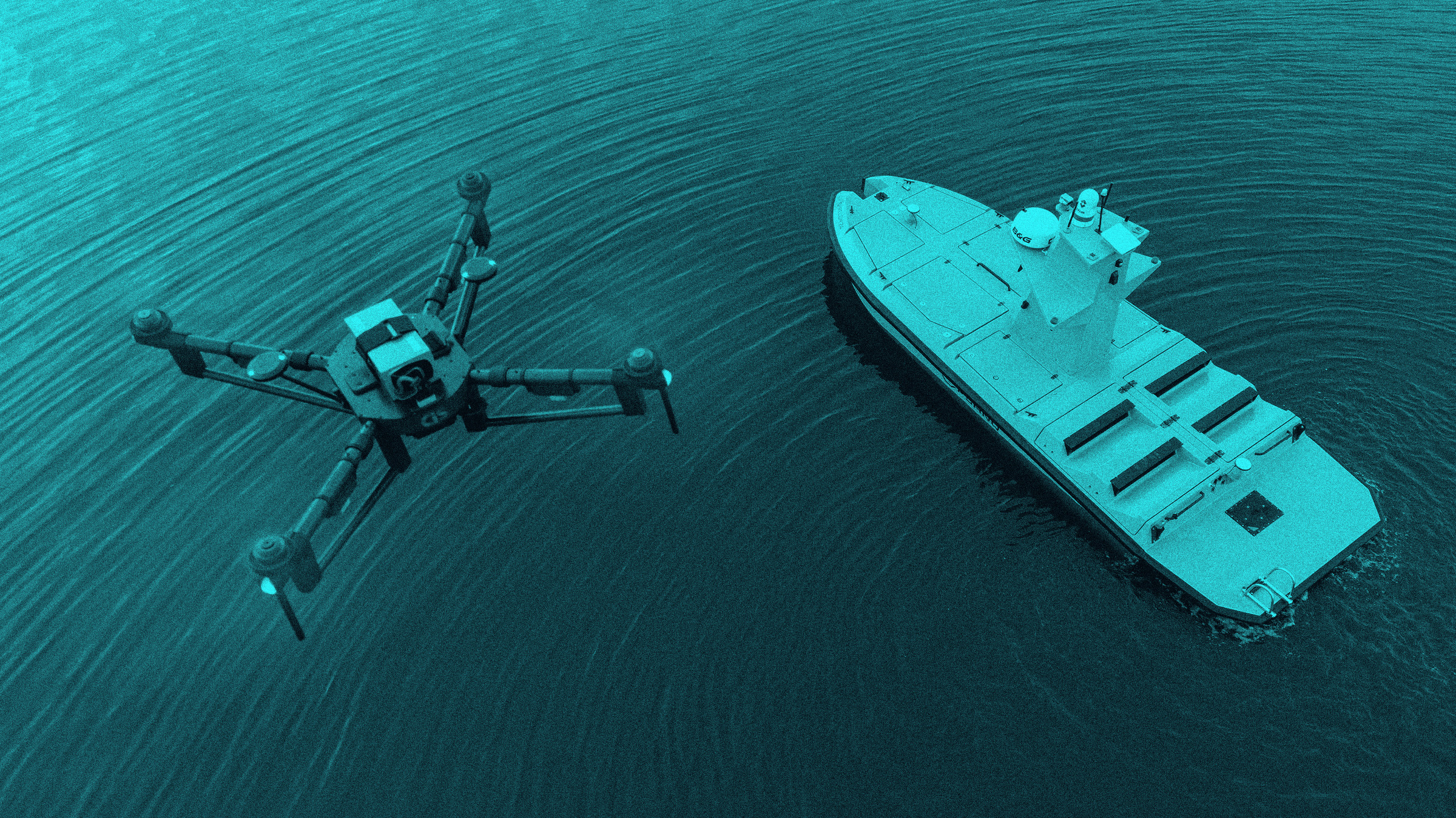
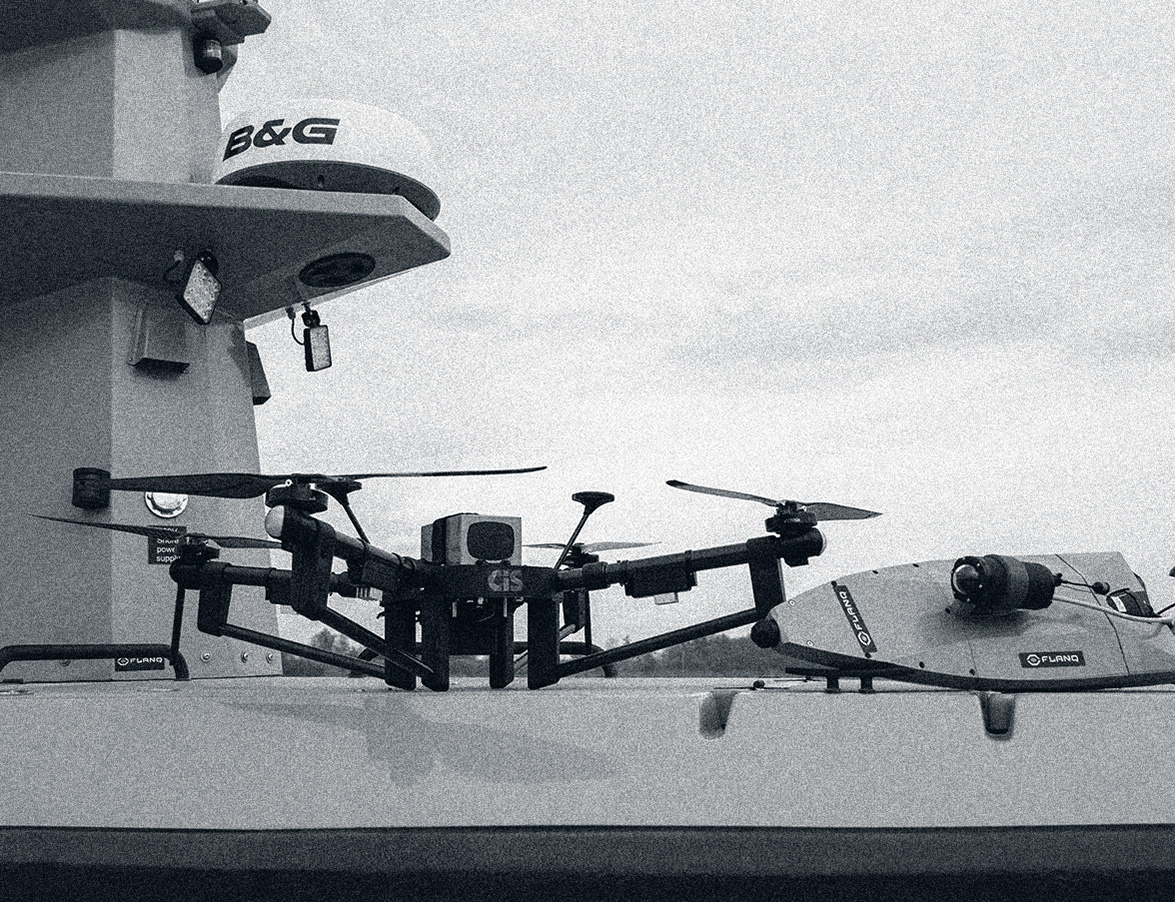
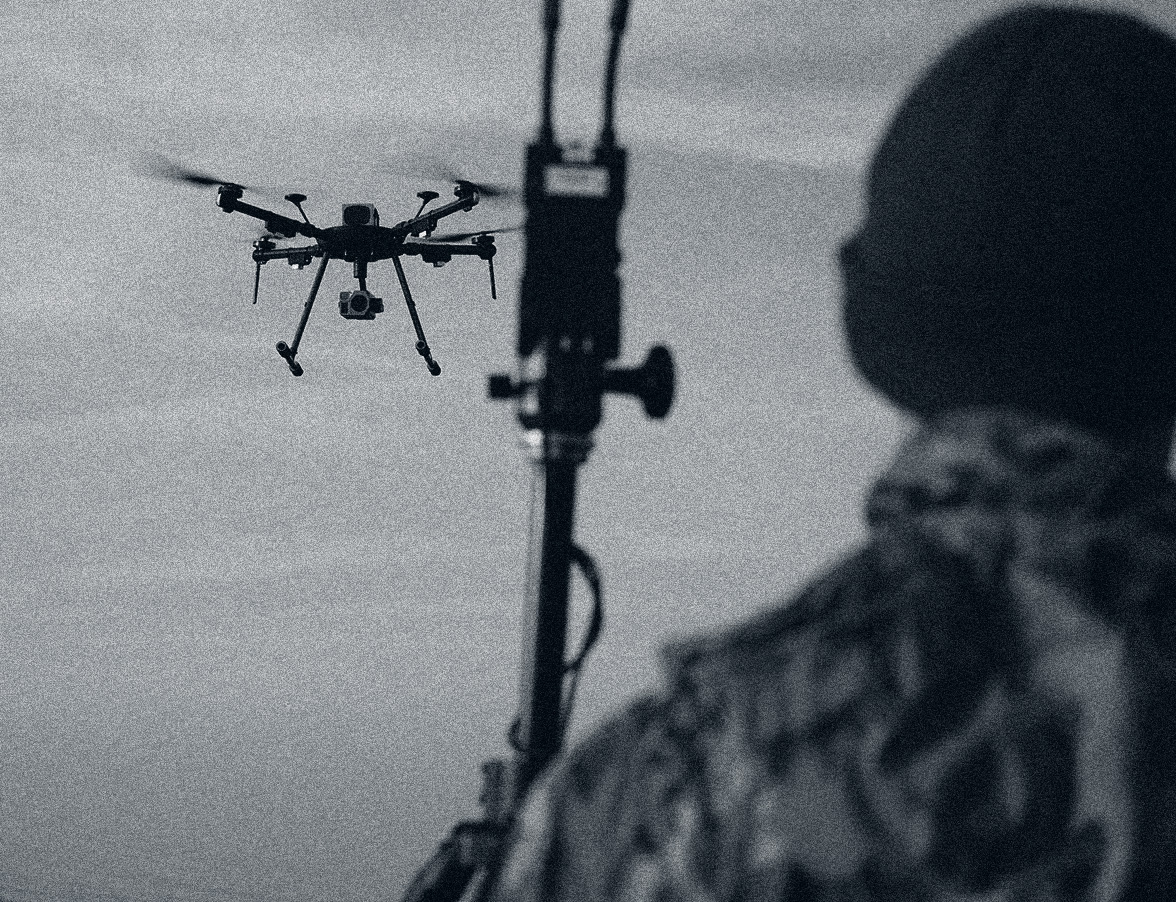
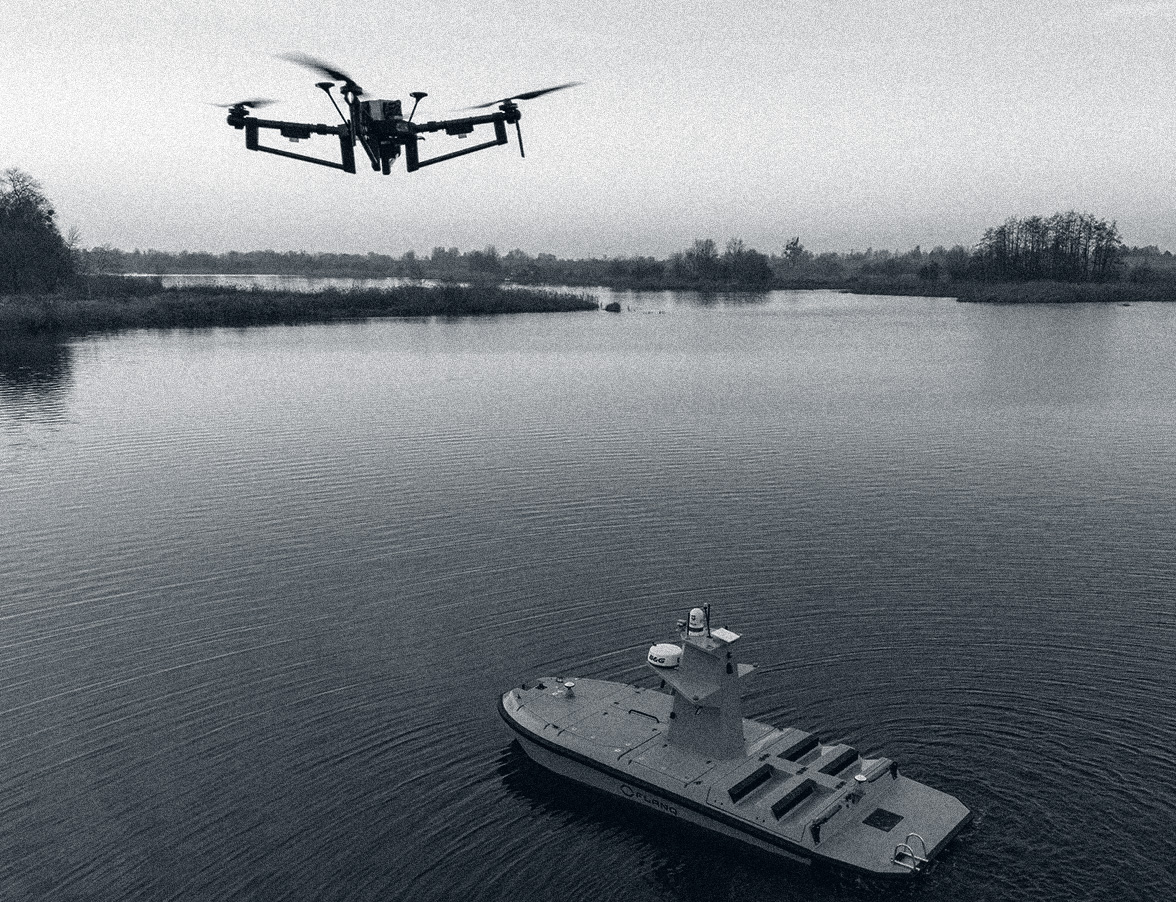
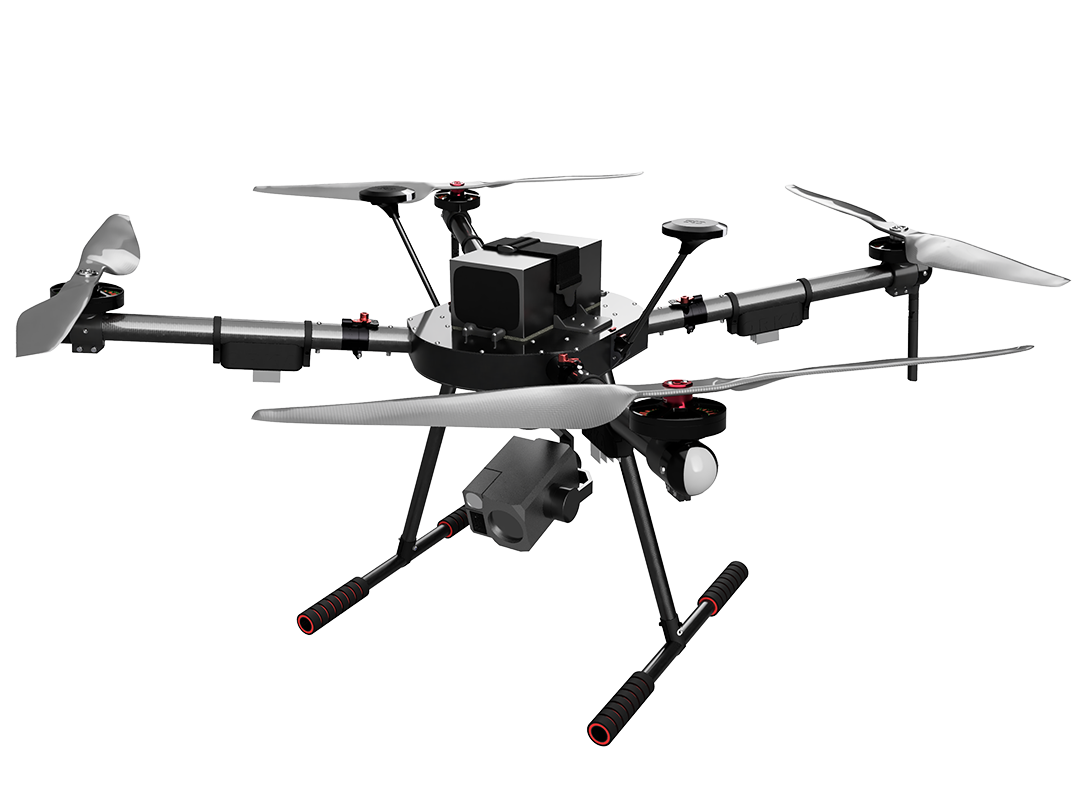
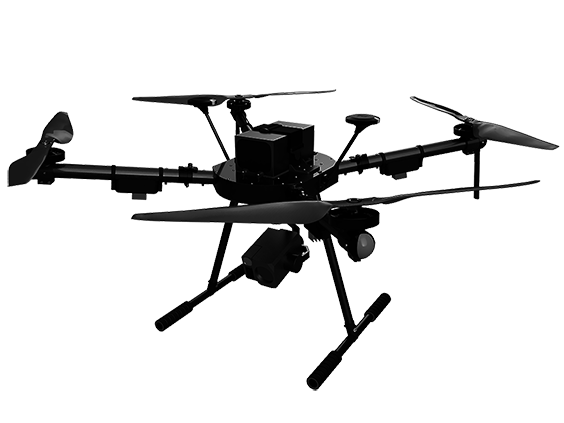
ORKA from CiS is a European designed and manufactured uncrewed aerial system (UAS) designed for cooperative operations with FLANQ uncrewed surface vessels (USV). This integration enables persistent multi-domain awareness impossible with single platforms. Operating exclusively from FLANQ USVs, ORKA extends sensor reach over-the-horizon whilst the USV provides enduring surface presence, creating force-multiplying capability for defence and maritime security operations.
ORKA can be automatically and rapidly tasked and airborne in 10 seconds. It delivers 75 minutes flight endurance with a 5.0 kg mission payload. It’s capable of operating in 14 m/s winds with a top speed of 100 km/h. Ceiling height is 3,000 metres. IP55 protection ensures reliable performance in -15 °C to +45 °C climates.
Multi-spectral payloads combine electro-optical zoom (250×), thermal imaging (1280×1024px), near-infrared, and laser range finding. Onboard AI enables automatic classification and tracking. The standardised interface supports reconfiguration including LiDAR, acoustic sensors, and communications relay. Data fusion integrates ORKA feeds with FLANQ Q-KONTROL and Q-MIND infrastructure.
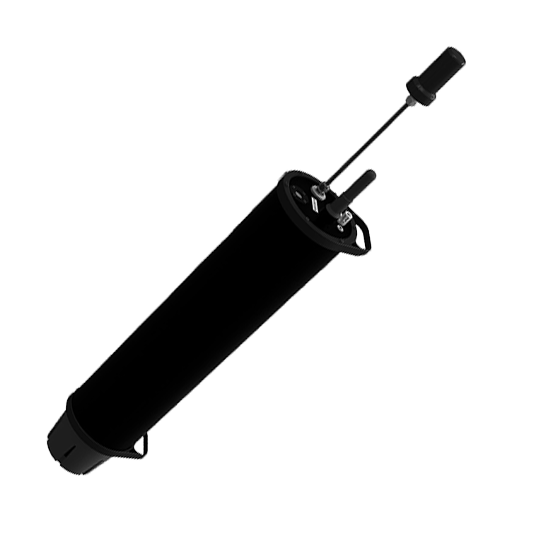
Launch and recovery from moving FLANQ vessels requires no human intervention, using CiS patented, field proven BEACON deck recognition technology. A fully enclosed deck-mounted hangar provides automated storage with quick charging (not wireless) ensuring continuous availability. The solution can operate in GNSS-denied environments. Communication range from USV to UAS is infinite (through satellite) or up to 100 km via mesh networkin
FLANQ USVs patrolling with ORKA UAS payloads provide enhanced situational awareness for improved maritime mission effectiveness.
Ready to launch from deck-mounted hangar in just 10 seconds, enabling immediate response to emerging threats or intelligence requirements with minimal activation time.
Integrated sensor modules including EO (zoom up to 250×), IR (up to 1280×1024px), optical IR zoom, NIR, night vision, and laser range finding for comprehensive situational awareness.
Intelligent onboard AI enables automatic detection, classification and tracking of targets, reducing operator workload and enhancing mission effectiveness.
ORKA is compliant with Sitaware, MESEmm CATL, STANAG operational standards for integration with existing C2 ecosystems.
Quick answers to some common questions about this product. Our support team is here to help with any specific questions you may have.
ORKA utilises CiS’s patented BEACON deck recognition technology to achieve fully autonomous launch and recovery from moving FLANQ USVs without human intervention. The system automatically identifies the landing platform, compensates for vessel motion caused by waves and sea state, and executes precision touchdowns in challenging maritime conditions. This capability was demonstrated at REPMUS 2025 – head to our media section to read more.
Combined with the automated hangar system, ORKA can be mission-ready in just 10 seconds, enabling rapid response to time-sensitive intelligence requirements whilst maintaining continuous operational availability through quick charging cycles.
The FLANQ-CiS cooperative autonomy creates force-multiplying capabilities impossible with single-domain platforms. Whilst the FLANQ USV maintains persistent surface presence for extended periods, ORKA extends sensor reach over-the-horizon, providing elevated vantage points for early threat detection. This multi-domain approach enables simultaneous surface and aerial surveillance without crew risk, particularly valuable for monitoring critical energy infrastructure, tracking shadow fleet vessels operating in contested areas, and maintaining coverage in regions where traditional crewed platforms face operational or political constraints.
ORKA delivers up to 75 minutes flight endurance whilst carrying a full 5.0 kg mission payload, enabling extended surveillance operations before returning to the USV for automated recovery and recharging. Communication range extends up to 100 km via mesh networking between multiple platforms, or effectively infinite range when utilising satellite communications. The system operates reliably in winds up to 14 m/s (Level 7 Beaufort) with a service ceiling of 3,000 metres. This performance envelope, combined with the USV’s enduring surface presence, enables continuous area coverage through successive launch-recover-recharge cycles without requiring shore-based support infrastructure.
F
Yes, ORKA incorporates multiple capabilities specifically designed for operations in degraded or denied environments. The system features GNSS-denied navigation modes enabling return home, route following, hover, and landing functions without satellite positioning. Dual RTK GNSS antennas provide enhanced accuracy when satellite signals are available, whilst alternative navigation methods ensure mission completion when they’re not. The platform supports multiple communication architectures including systems from DTC, and fibre optic tethered operations up to 120 metres altitude for scenarios requiring guaranteed connectivity.